


25 Apr Eat and Explore: A Philippines Food and History Trip
The Philippines—and its food and history—is one of the most underrated destinations in Asia.
While most people know about the country’s beaches, very few have a good understanding of just how rich and complex its culinary identity really is.
For example, people might know adobo, frequently introduced as the country’s national dish. But few realize just how much it reflects the country itself. Even long before Spanish colonizers arrived in the 16th century, indigenous communities were already preserving meat in vinegar and salt to withstand the tropical heat, making it a record of history as much as it is a recipe.
If you’re a foodie or a history buff—or better yet, both—this makes the Philippines as compelling a place to travel as any other. Its food reflects centuries of trade and migration, of resilience and adaptation as much as it does colonization and outside influence.
If you’re planning to travel to the Philippines, here are my suggestions for a trip focused on food and history. Below, I’ve outlined what I think are the best destinations for such a trip, giving you starting points to organize your itinerary around.
What to Know Before You Go
If you plan to visit different regions of the Philippines, here are some nice-to-knows:
1. The best months to visit are typically from November to April, as you avoid the mid-year typhoon season. The months of January and February are colder, but the summer months of March and April offer the best excuse to go to the beaches.
2. You can travel between the islands either via domestic flights or ferries. I suggest trying out ferries at least once for a slower, more immersive experience.
3. If you’re a digital nomad, you can now stay for one year here. Note, however, that some of the places listed above are more rural areas. Internet connection can be spotty sometimes, so you’ll sometimes be relying on cafes and co-working spaces. Just make sure to protect yourself when using public Wi-Fi—knowing what is VPN protection can go a long way in keeping your data secure.
4. Most Filipinos can speak at least some English as well, so there are little to no language barriers for English speakers. Despite the extent of Spanish influence, the language isn’t really spoken anymore.
Manila
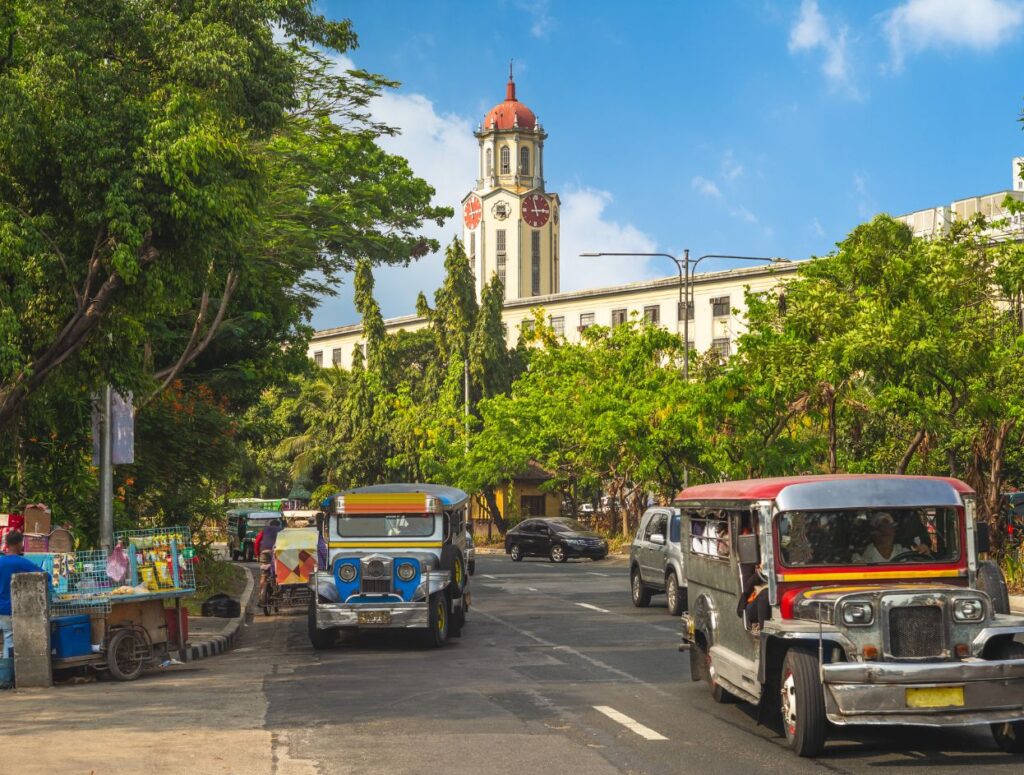
You will likely arrive in Manila. In my experience, it’s a city often dismissed as a chaotic urban jungle too quickly, by travelers, yes, but sometimes even by locals, too.
At first glance, it can seem overwhelming—dense traffic, tangled infrastructure, and relentless energy—if not outright unpleasant. However, if you dig deeper, you’ll find a city with real history and culture.
Intramuros is a good place to start, since it’s the closest historical landmark to Ninoy Aquino International Airport (where you’re likely arriving). It’s a walled town built by the Spanish in 1571, and it’s a city that feels both modern and ancient. Within the thick stone walls, colonial plazas, and centuries-old cathedrals lie contemporary cafes, museums, and courtyards.
Here, you can also check out Fort Santiago, where you can learn about José Rizal, a polymath and the Philippines’ national hero who spent his final days there before his execution in 1896. Take your time strolling through the cobbled streets!
For food, I highly suggest exploring both sides of Manila’s culinary scene: try both its street food and humble eateries (called karinderyas), as well as its more upscale restaurants. In districts like Quiapo, you can get most, if not all, the Filipino street food staples: skewers of fishballs dipped in sweet or spicy sauces, kwek-kwek (deep-fried quail eggs) served with vinegar.
For more refined takes on Filipino food, branches of Manam offer updated versions of familiar comfort dishes, while fine dining restaurants like Toyo Eatery take a more experimental approach, rethinking Filipino cuisine through modern techniques. They’re popular with tourists, yes, but for good reason. Their reputations are well earned, and I can recommend them myself.
You’ll quickly realize that Filipino food just makes sense given the country’s history and geography. Adobo comes from old preservation methods using vinegar, while sinigang’s sourness suits the hot climate and helps balance rich food. Lastly, the fact that most dishes are built for sharing reflects just how family- and community-oriented Filipinos are.
Pampanga
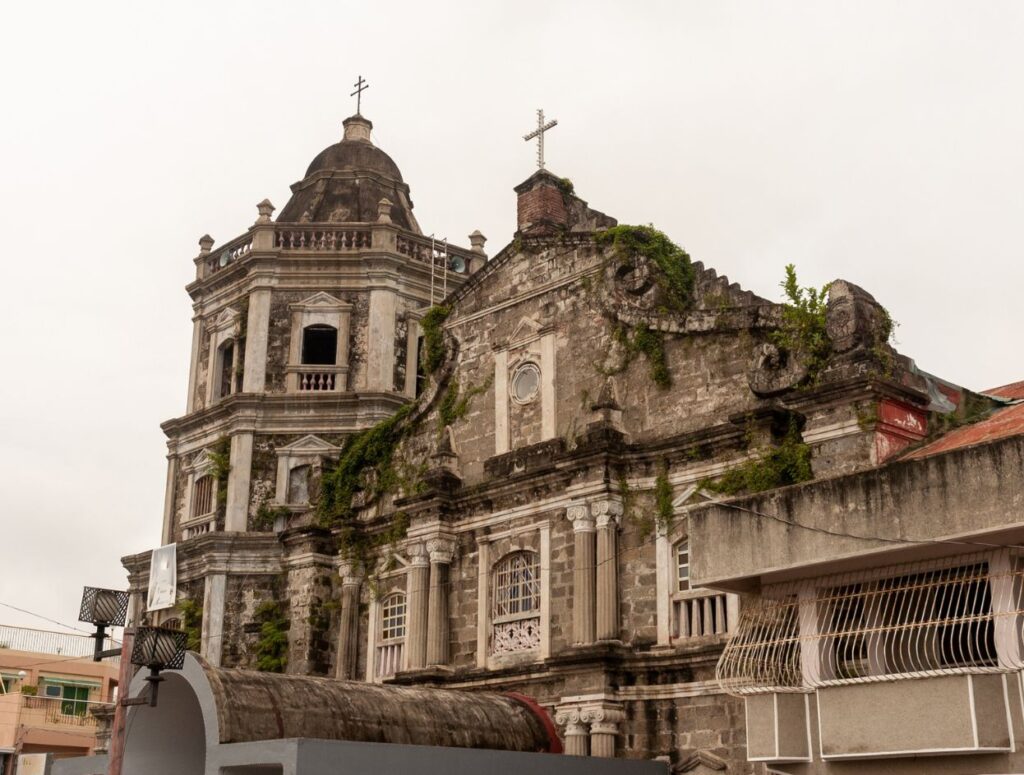
No Philippine food trip is complete without Pampanga, called the country’s culinary capital. And it’s called that for one simple reason: people from this province, called Kapampangans, are some of the most skilled and passionate cooks in the whole country.
An hour or two away from Manila, Pampanga was the first Spanish-established province in Luzon. The Spanish then taught the Kapampangans European cooking techniques, which, combined with local ingredients and traditions, gave way to timeless, signature recipes.
Sisig, one of the country’s most popular dishes, came from here. Traditionally made from chopped pork jowl, ears, and chicken liver, and seasoned with garlic, onions, and chilis, this dish is incredibly rich and savory. If you go to Pampanga, check out the sisig by Aling Lucing. The late Lucia Cunanan is credited with giving birth to the modern version of the dish. Lines are long, but it’s well worth the wait.
There’s also bringhe, a local take on paella made with coconut milk, and morcon, a meat roll that reflects Spanish culinary influence. In fact, there’s a whole list of signature Pampanga dishes that feel distinct, yet still unmistakably Filipino.
Vigan
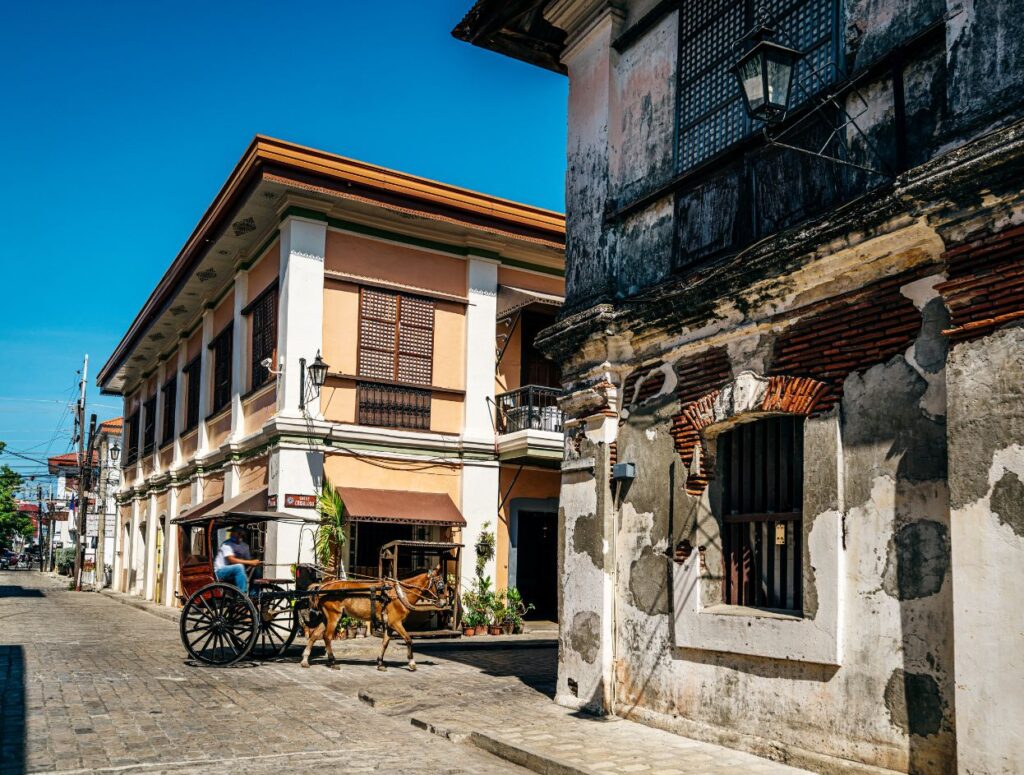
If Manila reveals layers of history, Vigan preserves them. Located in the Ilocos province, around a 7-hour drive or 1-hour flight from Manila, this UNESCO-listed city is one of the best-preserved examples of a Spanish colonial town in Asia. Unlike Manila, which got decimated by World War II, Vigan has remained largely intact.
The main attraction in the city is Calle Crisologo. Even more so than Intramuros, it truly feels like you’ve traveled back in time with its cobblestone streets and traditional Spanish houses. Chinese influences are also visible from the town’s history as a trading hub, and you can see it in the wooden upper floors, capiz-shell windows, and merchant-style house layouts.
In this region, you can taste Ilocano food, which has a distinct flavor profile even compared to other Filipino dishes. It tastes very bold, leaning heavily on fermentation and vinegar. It’s the perfect partner to cut through the rich fattiness of Bagnet, Ilocos’ own take on crispy, deep-fried pork belly.
But of course, you can’t go to Vigan without trying the iconic empanada. It’s a fried rice-flour pastry filled with green papaya, egg, and intensely garlicky longganisa—and maybe even other ingredients, depending on the store.
For something lighter, try out Ilocano pinakbet too, a vegetable dish cooked in bagoong monamon (fermented anchovies). It’s a variation of the Tagalog version you’ll typically see in the southern parts of Luzon, which uses bagoong alamang (fermented shrimp) instead.
Cebu
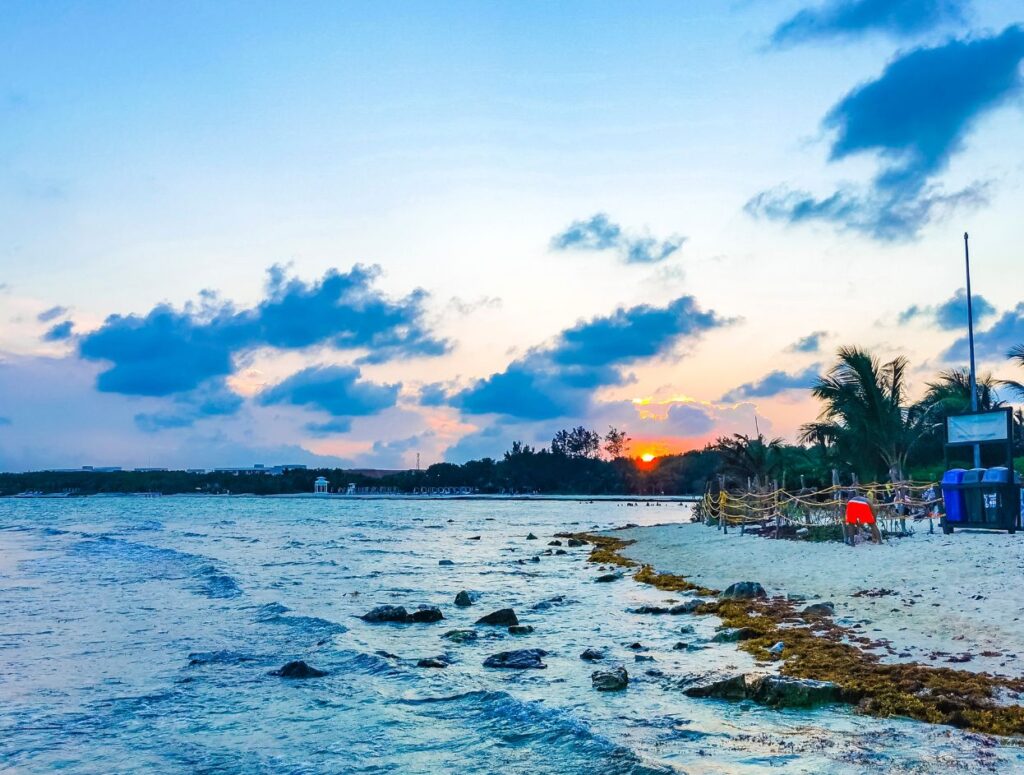
From Luzon, it’s time to head down to Visayas. Cebu is a great starting point. It’s now an urban metropolis, but there is still plenty of history here. It was on this island that Ferdinand Magellan landed in 1521, foreshadowing more than three centuries of Spanish colonization that would formally begin decades later. Landmarks like Magellan’s Cross and the Basilica Minore del Santo Niño are reminders of that history, and they’re still popular today with both tourists and pilgrims.
It is here in Cebu that I found my personal favorite Filipino dish: lechon. While you can find lechon pretty much anywhere in the Philippines, Cebu is the undisputed capital of lechon. Whole pigs, stuffed with various herbs and seasonings, and slow-roasted until the skin becomes crisp and glass-like, this dish is often the centerpiece of parties and celebrations for good reason.
There are too many great lechon places in Cebu to count, but I can personally recommend the following spots: Zubuchon, House of Lechon, and CnT Lechon.
Palawan
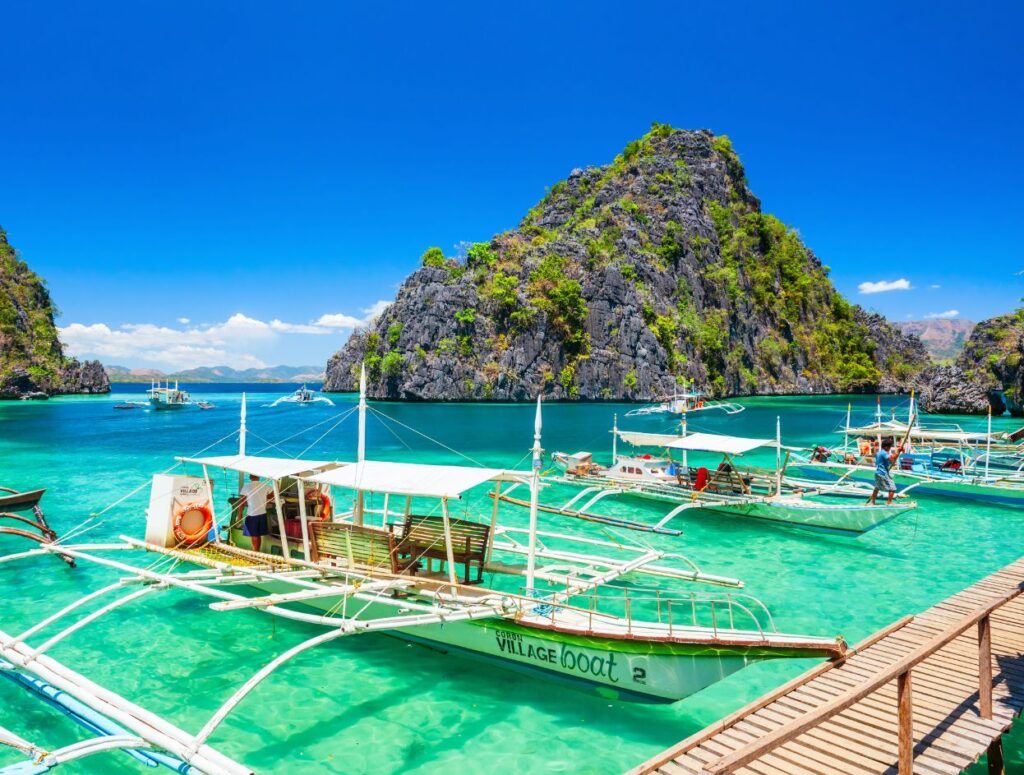
For a more laid-back, less urbanized experience, Palawan is hard to beat. Compared to Cebu and Manila, the province is defined more by its geography and indigenous communities, such as the Tagbanua, Tao’t Bato, and the namesake Palaw’an.
Here, the Philippines’ natural beauty is on full display, with limestone cliffs, clear lagoons, and untouched landscapes. The most popular places are El Nido and Coron, as well as the Puerto Princesa Subterranean River, another UNESCO World Heritage Site.
The seafood here is fresh, the kinilaw (the Filipino version of ceviche, one might say) often being served with vinegar, ginger, chilis, onions, garlic, and some form of citrus. The dish predates colonial influence, showcasing how the people here have been relying on local ingredients for centuries.
Palawan’s signature dish, however, is tamilok. It’s much like kinilaw, but instead of fish, Palaweños use a woodworm found in rotting mangrove trees.
All I can say is: don’t knock it until you try it!
Mindanao
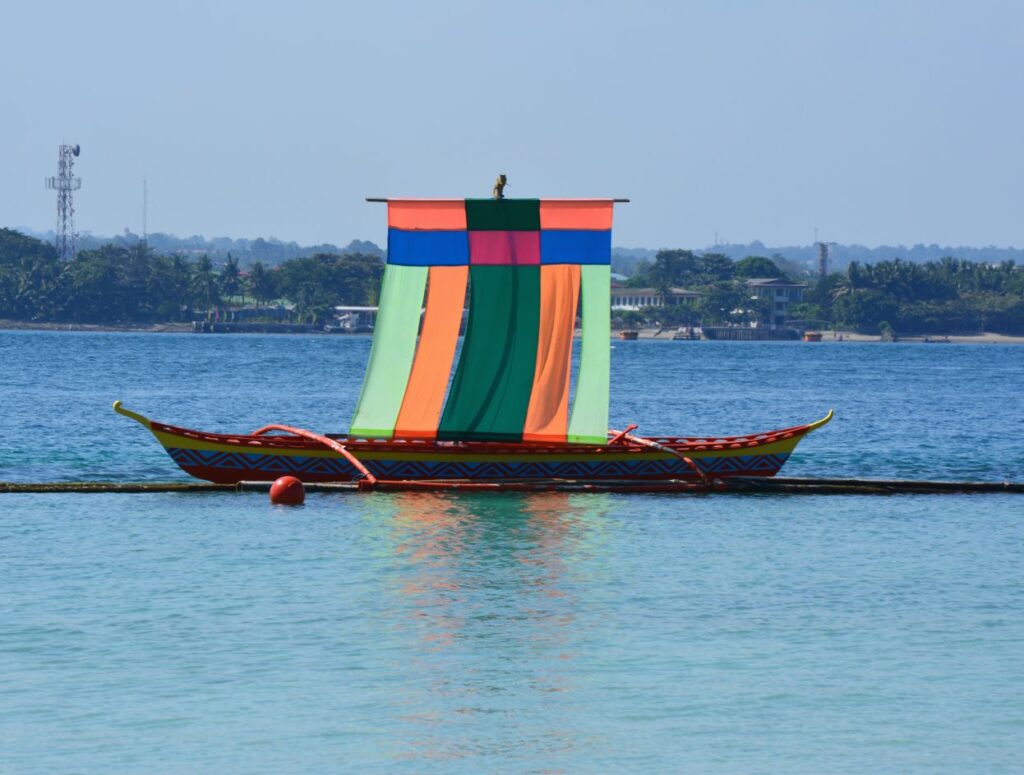
Further south, the island of Mindanao offers a different perspective on Filipino food altogether. While Spanish and even Chinese influences are tangible throughout Luzon and Visayas, the food here has stronger ties to Malay, Indonesian, and Muslim cuisine. After all, the Spanish never had the strongest foothold on Mindanao, as the indigenous peoples and Muslim communities here had some success resisting colonial rule.
The cuisine here is less vinegar-focused and instead relies more on spices and coconut. Try out dishes from the Maranao and Tausug peoples, like Tiyula itum, a dark, richly spiced beef soup, which gets its color from burnt coconut. You won’t find anything like it in Luzon or Visayas. Piaparan, a dish made with chicken, turmeric, coconut, and chili, was also one of my favorites.
Filipino food has been slowly but steadily gaining international traction, and in my opinion, it’s well-deserved. If you’re looking for a new cuisine to try, Filipino food might just be your next favorite. It’s a beautiful mix of influences—local, Spanish, Chinese, even American—and it comes together into something uniquely Filipino.



No Comments