


25 Jun The Mekong Budget Route: How to Travel Vietnam, Cambodia, and Laos Overland for Under $40/Day
There’s a version of Southeast Asia travel that involves five-star resorts and airport transfers, and then there’s the other kind — the one where you share a sleeper bus with chickens, eat $1.50 bowls of noodles at 7 am, and somehow end up having the better trip. The Mekong corridor is that second kind of travel distilled. Vietnam, Cambodia, and Laos, strung together overland, is one of the great budget routes left in the world, and unlike some backpacker classics that have quietly priced themselves out of the “budget” category, this one still works for under $40 a day if you’re reasonably smart about it.
Not $40 in a miserable, counting-every-riel way. More like $40 with good food, decent accommodation, and occasional splurges on a sunset boat trip.
The Route, and Why Overland Makes Sense
Flying between these three countries costs money and kills the experience. The overland route from Ho Chi Minh City through Phnom Penh, up to Siem Reap, across into southern Laos, and north toward Vientiane or Luang Prabang takes anywhere from two to four weeks, depending on your pace. That’s the version most people do.
One thing worth sorting before you leave home, rather than scrambling for at a guesthouse in Phnom Penh, is your phone setup. Several apps behave oddly across this route. Banking apps, streaming, and even Google Maps can get sluggish or blocked depending on which country’s network you’re on. A lot of travelers on longer Southeast Asia trips now just set up Private Internet Access on macOS easily before departure and forget about it — one less thing to figure out when you’re jet-lagged and trying to find your hostel.
The overland logic beyond that is simple: buses and shared minivans between these countries are cheap, the border crossings are relatively painless for most nationalities, and you actually get to see the landscape change. Cambodia from the window of a Phnom Penh to Siem Reap bus is flat, dusty, and strangely beautiful in a way that no airport transit lounge could ever tell you.
Visas and Borders: Budget the Real Costs First
Visa costs are where people often miscalculate their daily budget. Cambodia is usually $30 for an e-visa, sometimes less if you apply through the official portal rather than a third-party site that tacks on fees. Laos runs similarly, around $30–40, depending on your nationality, payable on arrival at most crossings. Vietnam’s e-visa is currently $25. So before you’ve eaten a single meal, you’re potentially $85–$95 down just on entry.
Factor that in before you set your daily budget. Spread over a three-week trip, it adds about $4–5 a day to your costs — not devastating, but worth knowing up front so you’re not confused when your average climbs higher in week one.
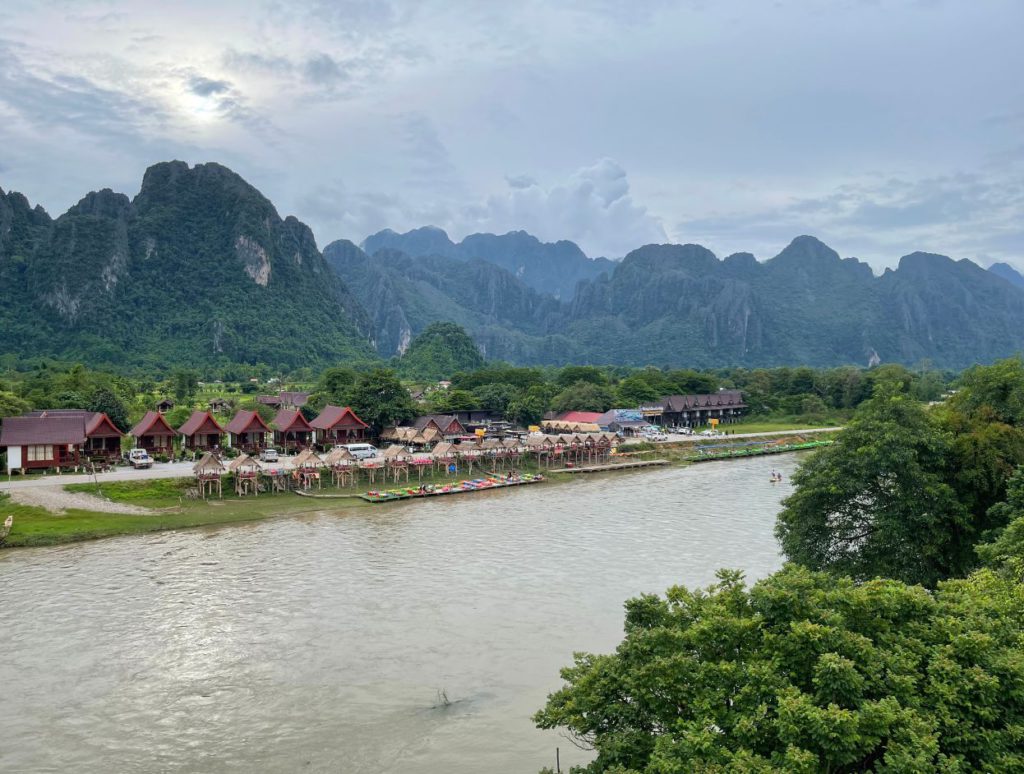
The Moc Bai crossing from Vietnam into Cambodia (via bus from Ho Chi Minh) is the most used and the most straightforward. The Don Det crossing from Cambodia into southern Laos is slower and more relaxed, which is either perfect or annoying depending on your mood that day. Avoid fixers at border crossings. They’re unnecessary on this route, and they always want money for things you can do yourself for free.
Where the $40 Actually Goes
Accommodation is where you win or lose the budget game here. Vietnam and Cambodia both have solid guesthouses in the $8–14 range — clean, with Wi-Fi and a fan or air conditioning. Laos is marginally cheaper outside of Luang Prabang, which has drifted upmarket. In Don Det, $6–8 bungalows right on the river still exist.
In Luang Prabang itself, expect to pay a bit more for anything decent — $15–20 for a private room isn’t unusual now. Food in all three countries is genuinely cheap if you eat where locals eat. In Vietnam, $1.50–$3 gets you a real meal — bún bò Huế, cơm tấm, phở, depending on where you are. Cambodia is similar once you move away from tourist menus. Laos is where street food becomes a bit less abundant, particularly in smaller towns, but a plate of larb or sticky rice with something grilled is still under $3 almost everywhere.
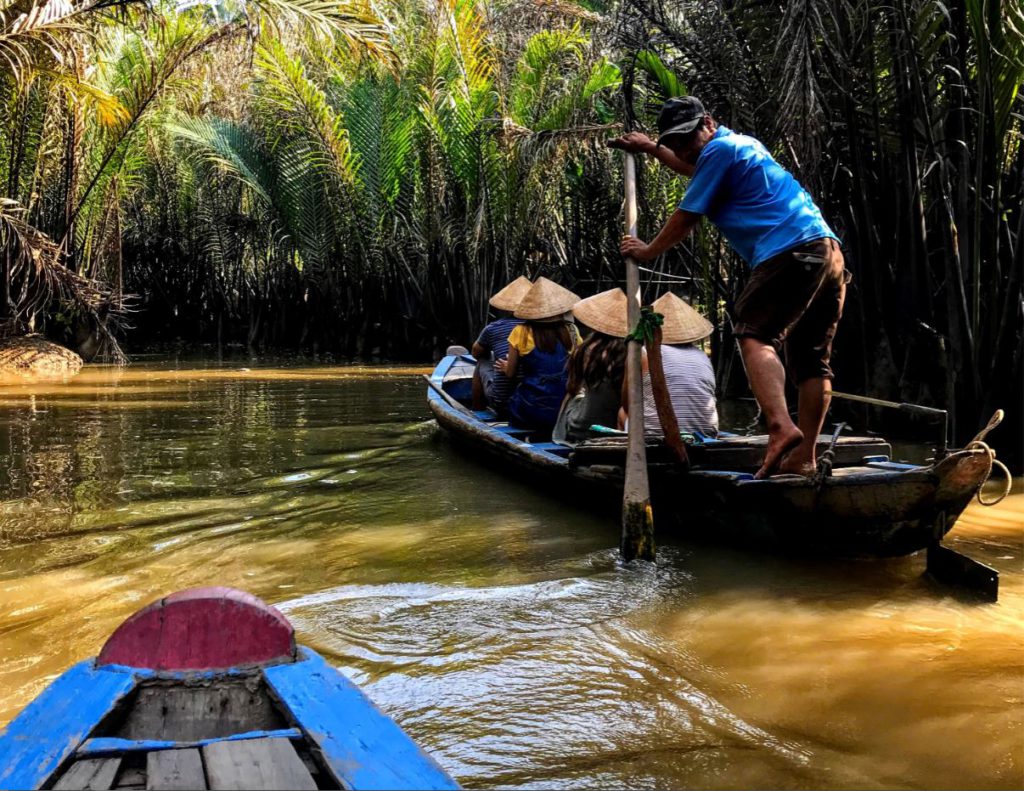
The Mekong Delta region is worth lingering in for the food alone. The fruit culture down there is genuinely something else — markets piled with mangosteen, rambutan, durian. Next time, visit the Southern Fruit Festival if the timing works out; it brings together much of what makes that part of the country worth
slowing down for.
Transport within countries is the other major line item. Sleeper buses in Vietnam are cheap — $10–18 for overnight routes, which also saves you a night’s accommodation if you time it right. In Laos, the slow boat from Huay Xai down to Luang Prabang is a two-day journey that costs around $35–40, including basic accommodation en route. It sounds like a lot, but it’s genuinely one of those travel experiences that doesn’t feel like getting from A to B.
Pacing the Vietnam Leg
Vietnam alone could swallow your whole trip if you let it. North to south is a long country, and the temptation to add one more stop is constant. How you structure it depends entirely on what you’re
after — coast, cities, mountains, or some combination. If you’re still figuring that out, our article Vietnam Travel Itinerary in 12 Different Ways is a useful starting point before you commit to anything.
For the overland route specifically, most people either start or finish in Ho Chi Minh City, using it as a gateway into Cambodia. Starting in the south and working north before looping back overland is one approach. Starting in Hanoi, heading south, and crossing at Moc Bai at the end is another option. Either works — just don’t try to cover the full length of Vietnam, plus Cambodia and Laos, in under two weeks. Something will feel rushed, and it’ll probably be Laos, which is a shame because Laos rewards exactly the kind of slow travel the rest of the route keeps threatening to become.
The Bits That Actually Affect Your Budget More Than You’d Think
Alcohol. If you drink, Laos and Cambodia have some of the cheapest beer in Asia — but it adds up fast when you’re in a guesthouse with $1 Beerlao and nothing to do after dark. Not a judgment. Just an observation.
Tours and activities are where you can quietly blow your budget without noticing. Angkor Wat is $37 for a single-day pass — budget for it properly. A cooking class in Luang Prabang runs $25–35. These things are worth doing; just don’t be surprised when a supposedly relaxed & “free day” in Siem Reap ends up costing you $60.
Timing, Pace, and the Part Nobody Tells You
The route works best between November and March. Dry season, manageable heat, no flooding on the Mekong crossings. April and May are brutal — the kind of hot that makes you rethink all your life choices by 10 am. The rainy season has its charms and prices drop, but border roads in rural Laos can get complicated.
21 days is a decent minimum if you want to move at a human pace rather than a sprint. Two weeks is doable, but you’ll feel like you’ve ticked boxes rather than actually been somewhere. The point of this route isn’t efficiency. It’s the slow accumulation of $2 meals, long bus journeys, and places you hadn’t heard of before someone on the guesthouse porch mentioned them.
That’s the budget version. Turns out it’s also just the good version.


Sorry, the comment form is closed at this time.